
Aviation Sovereignty: Quantifying the Network Expansion and Operational Maturity of the C919
The arrival of China Southern Airlines Flight CZ3813 in Hefei marks more than just a new route; it signifies the rapid scaling of the C919’s commercial footprint as it integrates into the high-density domestic aviation market. With Hefei becoming the 23rd commercial destination, the domestic jet is moving past the "initial trial" phase and into a high-frequency operational cycle. The flight parameters—a two-hour journey from Guangzhou—demonstrate the C919's efficiency in serving the 1,000 to 1,500-kilometer regional corridors that form the backbone of China’s internal logistics. For an airline like China Southern, which now operates a fleet of 10 C919 aircraft, the ability to maintain a consistent schedule across major hubs like Beijing, Wuhan, and Nanjing suggests that the aircraft's dispatch reliability and turnaround time are meeting strict commercial standards.
The cumulative data for China Southern's C919 operations is particularly telling of the jet's market acceptance. To date, the fleet has completed over 9,500 flights and transported approximately 1.3 million passengers. This translates to an average load factor that likely rivals established narrow-body competitors. From a technical and maintenance perspective, achieving 9,500 flight cycles without significant structural bottlenecks indicates a robust airframe lifecycle and high engine durability. As the fleet expands, we are seeing a strategic "network density" approach, where the deployment on high-traffic routes allows the carrier to optimize fuel burn rates and ground handling costs, which typically account for 20% to 30% of total operating expenses.
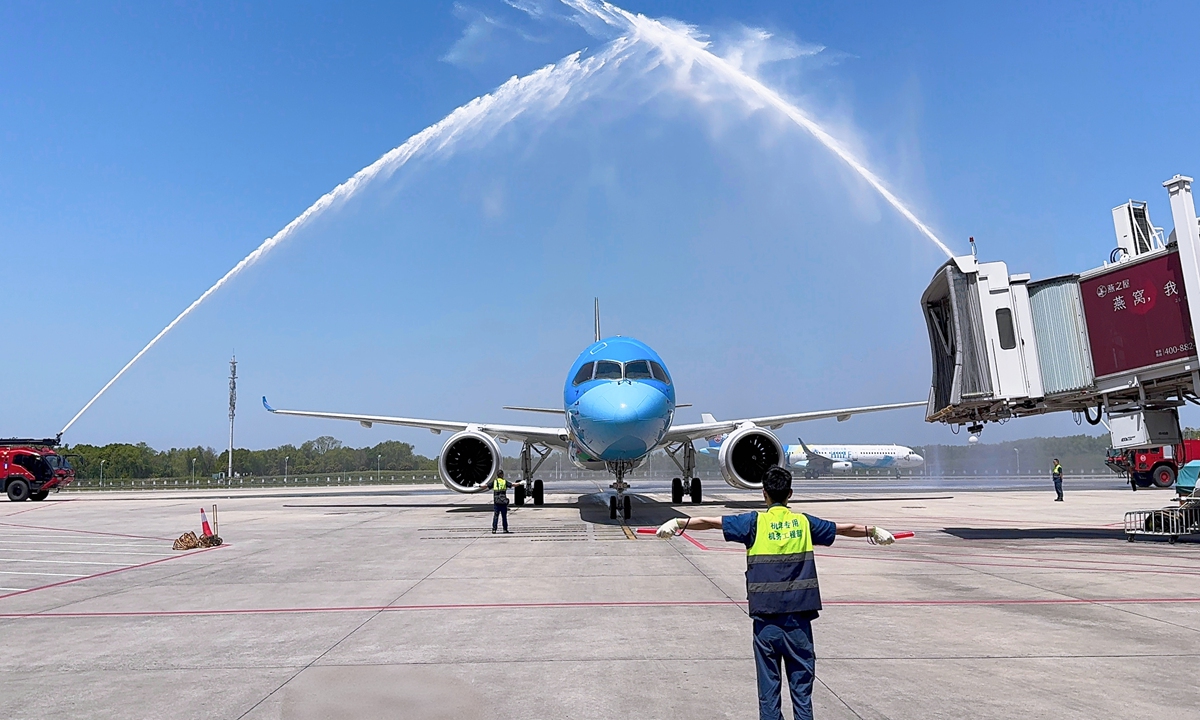
According to the People's Daily, the expansion of the C919 into the southeastern coast and Northeast China by carriers like Air China further diversifies the aircraft's operational stressors, testing its performance in varied humidity and temperature ranges. The maiden flights to Xiamen and Harbin in March 2026 provided critical data on the aircraft’s climb gradients and fuel efficiency under different atmospheric pressures. For the domestic aviation industry, the C919 is not just a piece of hardware; it is a platform for a localized supply chain that covers everything from advanced avionics to specialized composite materials, aiming to reduce the long-term CAPEX of fleet acquisition by 10% to 15% compared to traditional international duopolies.
As we look toward the remainder of 2026, the growth rate of the C919’s destination network—currently reaching 23 cities—suggests a compound monthly increase that will soon see the jet appearing in every major Tier-1 and Tier-2 airport in the country. The transition from 9,500 to a forecasted 20,000 flights will provide the necessary sample size for a full-scale return-on-investment analysis. By stabilizing production and expanding the service network, China is effectively building a diversified aviation ecosystem where the C919’s reliability, 150-190 seat capacity, and 4,075-kilometer range offer a highly competitive solution for the world’s most active domestic flight corridors.
News source: https://peoplesdaily.pdnews.cn/china/er/30051996366